Blog
Advanced CRM / Ai / Automation / Business Services

They're Calling It a "Tax Credit" — But Make No Mistake, It's a Voucher
There is a new federal program quietly reshaping the education landscape. It's buried inside the Republican Party's sweeping "One Big Beautiful Bill," and it's being sold to the public as a simple tax incentive — a way to give families more options, more freedom, more choice in how their children learn.
But let's call it what it actually is: a nationwide school voucher program. One that diverts public dollars into private schools while dismantling the civil rights protections that Black students, students with disabilities, and families from under-resourced communities have depended on for decades.
At B.E.A.M. Education, we work across the full spectrum of schooling — public, private, and charter. Our mission has never been to champion one model of education over another. It has been to champion every child — and to serve as an educational and legacy voice for the Black community in the United States, grounded in the full truth of our history, including the parts that have been forgotten, minimized, or deliberately left out. That mission requires us to speak clearly when policy puts our communities at risk.
This is one of those moments.
What Is the Federal Tax Credit Scholarship Program?
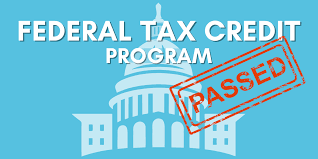
The Federal Tax Credit Scholarship Program (FTCS), passed as part of the "One Big Beautiful Bill," works like this:
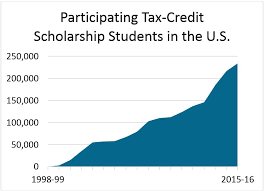
Individual taxpayers can donate up to $1,700 annually to private organizations called Scholarship Granting Organizations (SGOs). In exchange, they receive a 100 percent federal tax credit — meaning their donation is fully reimbursed by the government. Those SGOs then distribute the money as scholarships to families enrolling their children in private schools.
The result? Private donations become publicly reimbursed dollars flowing into private schools, with virtually no oversight, no accountability standards, and no requirement to demonstrate student outcomes. It is a voucher program in every meaningful sense — just structured to avoid the political baggage of that word.
This model already exists in at least twenty states — including Arizona, Georgia, Louisiana, and Pennsylvania. What the FTCS does is nationalize it, scaling a system of camouflaged privatization to a level never seen before in American education.
"Choice" — A Word With a Long History in Our Community
The word choice has been used in education policy conversations aimed at Black families for decades. And on its face, the idea is appealing. Who doesn't want options? Who doesn't want the freedom to direct their child's education?
But our community knows from lived experience that "choice" without accountability, access, and protection is not liberation. It's a door that opens for some and stays locked for others.
The data bears this out. Most new voucher users are not families escaping struggling schools — they are families whose children were already enrolled in private schools, now receiving a taxpayer-funded subsidy. Because voucher amounts rarely cover full private school tuition, families without disposable income, flexible schedules, or reliable transportation are effectively excluded from the very "choice" being advertised.
Meanwhile, those left behind in public schools — who are disproportionately Black, brown, and low-income — face the downstream consequences. Education funding is largely enrollment-based. When students leave, dollars leave. Schools consolidate. Programs are cut. Teachers are reduced. Rural communities and urban neighborhoods with the greatest need often absorb the greatest losses.
The question we must always ask is not just "Is there a choice?" but "Who actually gets to choose — and who is left holding the cost?"
The Civil Rights Stakes: A History We Cannot Afford to Forget
Here is where B.E.A.M.'s legacy mission demands we go deeper — because this story didn't begin in 2025.
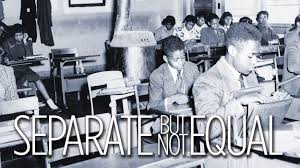
School vouchers in America have roots in resistance to Brown v. Board of Education. After the Supreme Court ruled in 1954 that segregated public schools were unconstitutional, Southern lawmakers understood something critical: Brown applied to public schools. Private schools were a different matter. So they created tuition grant programs — publicly funded — designed to help white families avoid integration. It was a legal end-run around desegregation, funded with taxpayer dollars.
That history is not ancient. It is living context for every voucher debate happening today.
Public schools that receive federal funding are required by law to comply with federal civil rights protections — Title VI and Title IX of the Civil Rights Act, the Individuals with Disabilities Education Act (IDEA), and Section 504 of the Rehabilitation Act. These are not administrative formalities. They are the product of decades of advocacy, litigation, and sacrifice by Black Americans and disability rights communities who insisted that children deserve equal protection under the law regardless of zip code, ability, religion, or background.
Private schools participating in the FTCS are under none of those obligations. They can — and some do — deny enrollment based on disability status. They can enforce dress and appearance policies that target Black students' natural hair. They can dismiss students with limited legal recourse. And under this new federal program, they can do all of that while operating on public dollars with no academic performance standards, no transparency requirements, and no obligation to demonstrate results.
In 2024 alone, the U.S. Department of Education received nearly 23,000 civil rights complaints — over 8,400 related to disability discrimination. That is how many families are actively depending on these protections right now. Public money without public accountability is not a new idea. And we know, from history, which communities end up paying for it.

B.E.A.M.'s Position: Accountability Across Every School Type
Because B.E.A.M. works with public, private, and charter schools, we want to be clear: our concern is not about the model of any particular school. Excellent education happens in many different environments. Innovation matters. Flexibility matters. Community-centered design matters.
What does not change — regardless of school type — is the standard we hold for every institution that touches a child's life: You must be accountable to the families and community you serve.
When a school — public, private, or charter — accepts public dollars in any form, that accountability is not optional. It is the price of public trust. And a program that routes billions of taxpayer dollars to schools with no requirement to protect civil rights, serve all students equitably, or demonstrate academic outcomes is not educational progress. It is educational regression, repackaged.
B.E.A.M.'s work is rooted in the belief that the achievement gap cannot be closed without first closing the narrative gap — the gap between what our children are taught about themselves and what is actually true. Black Americans have contributed to this nation's science, mathematics, literature, agriculture, military history, governance, and global culture in ways that our standard textbooks have long minimized or ignored entirely. When we restore that record — in public schools, in private schools, in charter schools, in microschools — we restore something essential to every child who walks through those doors.
That is the work. And that work requires institutions that are worthy of it — transparent, accountable, and committed to every student, not just the ones who are easiest to serve.
What This Means for Texas
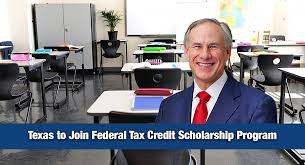
For those of us in the Dallas-Fort Worth community, this is not abstract national policy. Texas is home to more than 5.5 million public school students. State lawmakers have debated voucher legislation for years, and with a federal program now on the table, the pressure to opt in will intensify.
Texas Freedom Network and education advocates across the state have consistently called on Texas leaders to protect those investments rather than divert them — particularly for students in rural districts, students with special needs, and children in under-resourced urban communities who have the most to lose and the fewest alternatives.
Our communities cannot afford to be spectators in this conversation.
What You Can Do
Learn the history. Understanding where vouchers came from — and why — is the foundation of any informed position on where they're going.
Follow the money. Organizations like the Century Foundation (tcf.org) and Texas Freedom Network (tfn.org) provide ongoing, nonpartisan analysis of how the FTCS is being implemented at the state level.
Engage your school board and legislators. Local voices matter. School boards and state representatives need to hear directly from parents, educators, and community members who understand what accountability looks like and why it matters.
Support accountability-centered education. Whether in a public school, a charter, or a private institution, advocate for environments where every child has legal protection, cultural affirmation, and a full, honest education — including the legacy that belongs to them.
Ask the hard question. When any program, politician, or organization tells you a new initiative will help your child, ask: If it doesn't work, who is responsible? If my child is mistreated, what recourse do I have? The answers reveal everything.
The Bottom Line
A tax credit is not a civil rights protection. A scholarship granting organization is not a public school. And "parent choice" is not equity if the system it funds has no obligation to serve every child equally — especially those who have historically been the first to be turned away.
B.E.A.M. Education exists to advocate, champion, cultivate, and link stakeholders in service of every learner we touch — across every type of school, in every kind of community. We carry the responsibility of being a legacy voice for the Black community not as a burden, but as an honor. That legacy includes the educators, activists, and families who fought — and in many cases still fight — for the right to an equal education.
We intend to honor that fight by staying informed, staying engaged, and refusing to let the language of "choice" be used to quietly dismantle the protections that make genuine choice possible for all of our children.
The wave is coming. B.E.A.M. will be riding it — not watching from the shore.
B.E.A.M. Education is a nonprofit educational consulting organization serving public, private, and charter schools across the Dallas-Fort Worth area and beyond. We are dedicated to Building Excellence Academically & Mindfully — and to serving as an educational and legacy voice for the Black community in the United States. The B.E.A.M. Microschool Academy opens September 2026 in partnership with New Covenant Christian Fellowship Church in Dallas, Texas. Learn more at beameducation.org and beammicroschool.org.
Frequently Asked Questions
Who can benefit from using EBA - Education & Business Automation CRM?
Our CRM is versatile enough for businesses of all sizes—small, medium, and large enterprises. Whether you're a startup looking to establish customer relationships or a large corporation needing to manage complex customer interactions, our CRM can be tailored to your needs.
What are the different pricing plans for EBA - Education & Business Automation CRM?
We offer a variety of pricing plans to suit different business sizes and needs, ranging from basic to premium tiers. Each plan comes with a detailed description of features on our pricing page, and you can always upgrade or customize your plan as needed.
Is there a free trial available, and what does it include?
Yes, we offer a 15-day free trial that gives you full access to all the features of our CRM. This allows you to evaluate how our CRM fits your business before making any commitment.
Is my data safe with EBA - Education & Business Automation CRM?
Yes, data security is a top priority. We use the latest encryption standards and follow stringent data protection regulations to ensure that all your data remains secure and private.
What kind of support can I expect if I encounter an issue?
We offer 24/7 customer support through multiple channels, including live chat, email, and phone. Additionally, our online support portal is available with guides, tutorials, and troubleshooting articles.
Quick Links
Home
Help Center
Book a Demo
Contact Us
EBA - Education & Business Automation
EBA - Education & Business Automation
1630 Nina Dr, Grand Prairie Texas 75051
(214) 924-8164
Connect


©{{location.name}2026
All Rights Reserved