
What Is “Make America AI-Ready”?
On March 24, 2026, the U.S. Department of Labor (DOL) launched “Make America AI-Ready,” a free national AI literacy course designed to give American workers basic AI skills via text message. Anyone can simply text “READY” to 20202 and receive short lessons and daily challenges that can be completed in about 10 minutes a day over seven days. The goal is radical accessibility—no laptop required, just a phone—so even workers with limited internet access can participate.
The program was built through a public‑private partnership between the DOL and Arist, an education technology company that specializes in delivering courses via text. Under President Donald Trump, the initiative is framed as part of “America’s Talent Strategy” and the White House AI Action Plan, both focused on preparing workers for an AI‑driven economy.
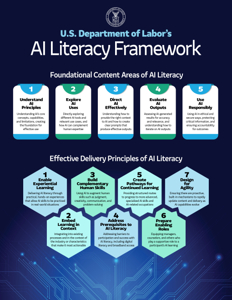
The Government’s AI Literacy Framework, Simplified
“Make America AI-Ready” is not a one‑off gimmick; it is aligned to a formal AI Literacy Framework the DOL released in February 2026. That framework outlines foundational content areas and delivery principles that education and workforce systems across the country are now expected to use as a guide.
The AI course itself is built around five key learning areas:
Understand AI Principles– Grasping core concepts, capabilities, and limitations of AI so people know what AI can and cannot do.
Explore AI Uses – Direct hands‑on exploration of different AI tools and real‑world use cases where AI can complement human expertise.
Direct AI Effectively – Learning how to give clear context and write effective prompts so AI systems produce usable outputs.
Evaluate AI Outputs – Assessing AI‑generated responses for accuracy and relevance, instead of blindly trusting the technology.
Use AI Responsibly – Addressing ethics, data security, and accountability when AI is used in work and learning.
The DOL’s framework is meant for workers, employers, educators, and even state and local governments to use as a shared baseline when designing AI‑related training and curriculum.

What This Means for Educators
For educators, this initiative is both a challenge and an opportunity. The DOL has explicitly said it wants its AI framework to guide curriculum development and assessments so that AI literacy is integrated into education and training programs, not treated as an optional add‑on. That includes helping educators decide what AI content to teach, how to evaluate competency, and how to keep pace as AI technology evolves.
The framework also pushes for stronger collaboration between training programs and local employers to give learners hands‑on experience with AI tools that are actually used in regional labor markets. When this alignment happens, graduates are more employable, programs are more competitive, and communities build local talent pipelines instead of exporting opportunity to other regions.
In practical terms, this means every school, microschool, after‑school program, and workforce training provider will need to:
Embed AI literacy outcomes into their learning goals.
Train teachers and facilitators to use AI responsibly and effectively.
Build partnerships with local businesses and entrepreneurs to give students authentic AI‑powered projects.
What This Means for Entrepreneurs and Employers
The DOL is clear: employers are expected to help build “AI‑ready workforces.” That includes onboarding, training, and managing the implementation of AI tools so staff can work effectively and responsibly with them. Employers are encouraged to provide clear internal guidance on when and how to use AI, and to identify roles that may need deeper non‑AI proficiency even as AI becomes more prevalent.
For entrepreneurs, this shift creates three powerful realities:
AI literacy is now a competitive advantage in hiring and team development.
Customers, partners, and funders will increasingly ask how AI is used—ethically and strategically—in your business.
There is a growing market for products, services, and programs that help people and organizations close the AI skills gap.
This is exactly the intersection where educator‑entrepreneurs can thrive: designing learning experiences that are relevant, ethical, and deeply connected to real‑world opportunity.
How B.E.A.M. Education Fits Into This New Landscape
B.E.A.M. Education’s mission is to offer innovative, research‑based instructional frameworks that align with the needs of 21st‑century learners, with a focus on unlocking the best possibilities for humanity. Based in the DFW area and built as a partnership‑driven, community‑centered organization, B.E.A.M. is uniquely positioned to respond to the AI‑readiness moment by serving both educators and entrepreneurs.
While the federal government provides a high‑level framework, local organizations like B.E.A.M. translate that vision into on‑the‑ground practice—through micro‑school models, entrepreneurship camps, and professional learning experiences. B.E.A.M. has already framed its work around innovative teaching, entrepreneurial thinking, and community‑driven education, which are exactly the ingredients needed to turn AI literacy into meaningful, life‑changing opportunity.
Why We Need a Movement, Not Just a Course
A 7‑day text‑based course is a powerful start, but it is not a full solution. The DOL itself acknowledges that its AI literacy framework will have to evolve as technologies and labor markets change, and that it depends on feedback and collaboration from stakeholders across the workforce and education ecosystems. That means what happens in classrooms, micro‑schools, community centers, churches, small businesses, and startups will ultimately determine whether America becomes truly “AI‑ready.”
A movement is needed because:
Access must be equitable, not just technically available. Text‑based courses help, but ongoing guidance and contextualized support are essential.
Context matters. AI literacy looks different in Dallas than in Detroit or Denver; it looks different for a classroom teacher than for a solo founder.
Culture shapes usage. Communities need safe spaces to experiment, question, and build norms around responsible AI use that reflect their values.
B.E.A.M. Education exists to build that kind of movement—locally anchored, nationally relevant, and future‑focused—by bringing educators and entrepreneurs into the same conversation.
Join the B.E.A.M. Educational Movement
If you are an educator, this is your moment to lead, not react. If you are an entrepreneur, this is your chance to build businesses and initiatives that align with where the country is going, not where it has been.
B.E.A.M. Education is inviting you to:
Connect with a community of like‑minded educators, parents, and entrepreneurs committed to AI‑ready, humanity‑centered learning.
Help shape instructional frameworks and learning experiences that respond directly to national AI literacy priorities while honoring local community needs.
Support the launch and growth of models—like micro‑schools and youth entrepreneurship programs—that give students real‑world, AI‑powered learning experiences.
Visit beameducation.org to join our community, register to stay updated, and explore ways to contribute financially or through your expertise so we can “unlock the best possibilities for humanity” together. The Department of Labor has drawn the roadmap; B.E.A.M. is building the vehicles and training the drivers. Now is the time to join the B.E.A.M. Educational Movement and help make your classroom, your business, and your community truly AI‑ready.


